Constructions forBeverage & Dairy Bottles
Open any product code for the full specification and the verified case where available.
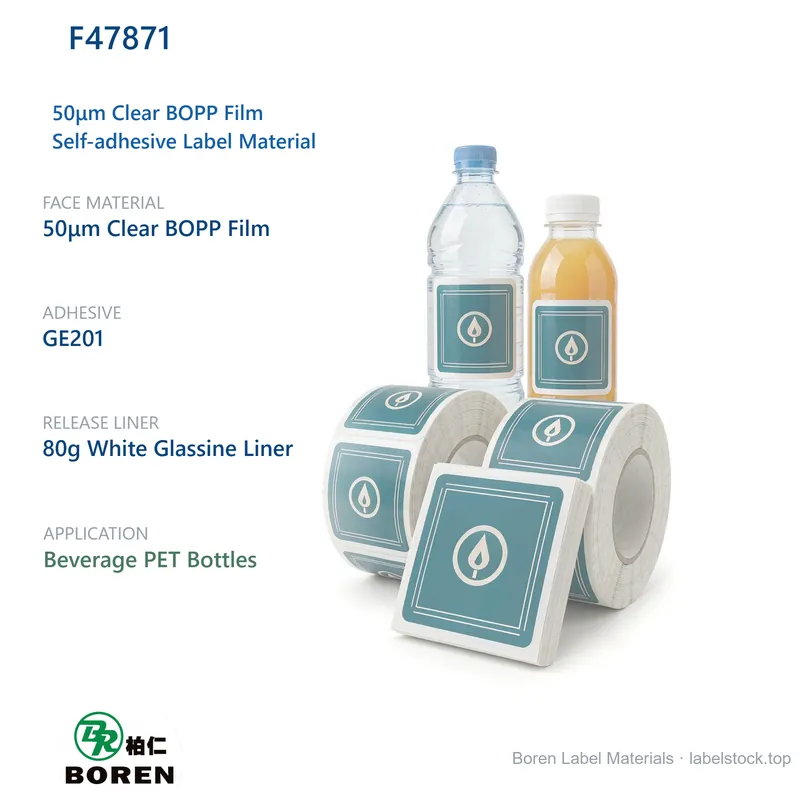 F47871
50μm Clear BOPP Film · Standard
80g White Glassine Liner · Back Printing
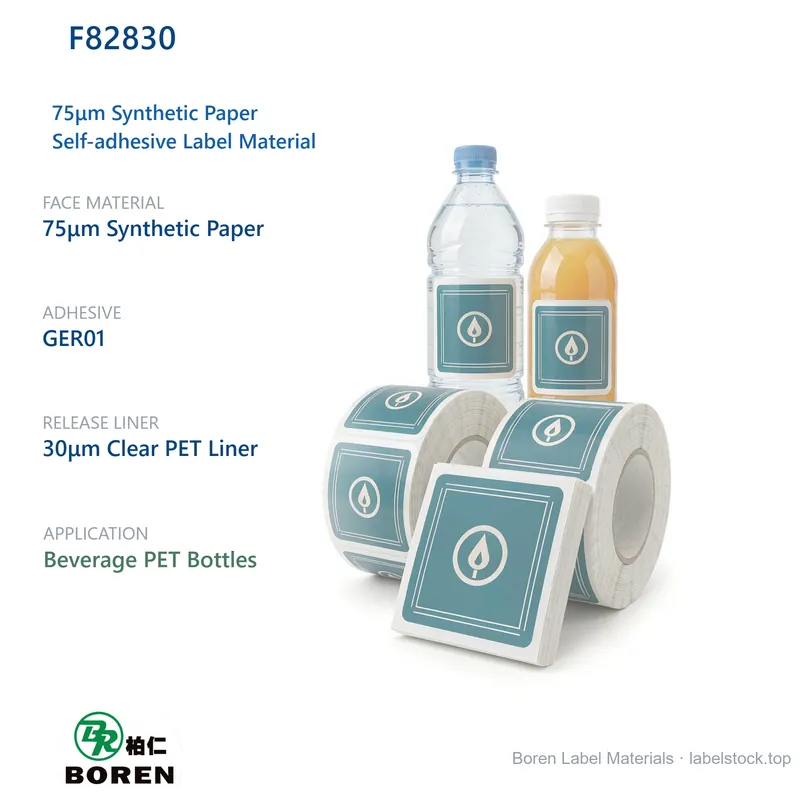 F82830
75μm Synthetic Paper · Removable
30μm Clear PET Liner · No Back Printing
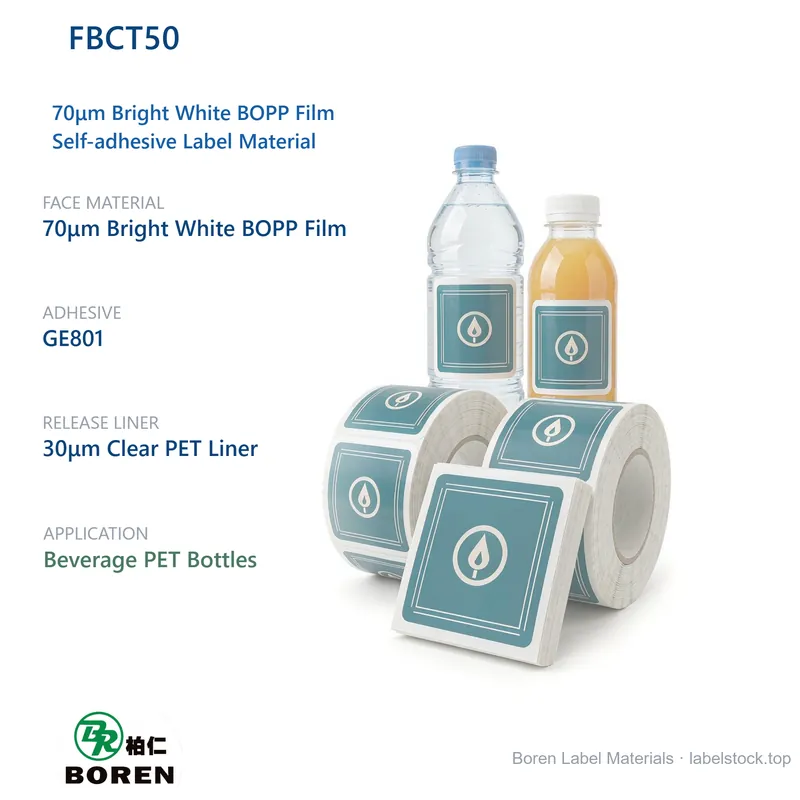 FBCT50
70μm Bright White BOPP Film · Low-odor / Residue-free
30μm Clear PET Liner · No Back Printing
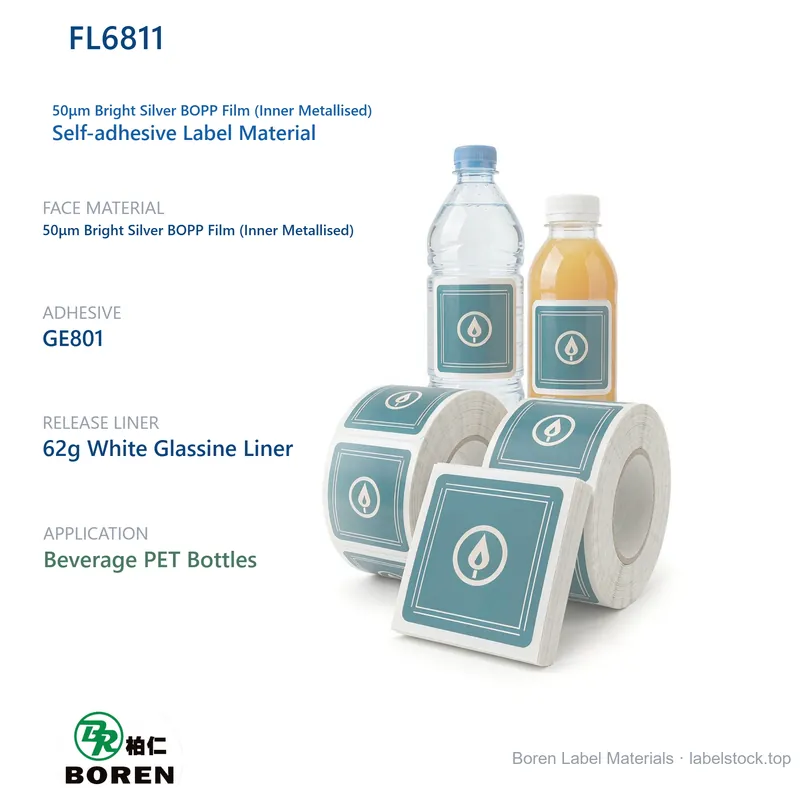 FL6811
50μm Bright Silver BOPP Film (inner metallised) · Low-odor / Residue-free
62g White Glassine Liner · Back Printing
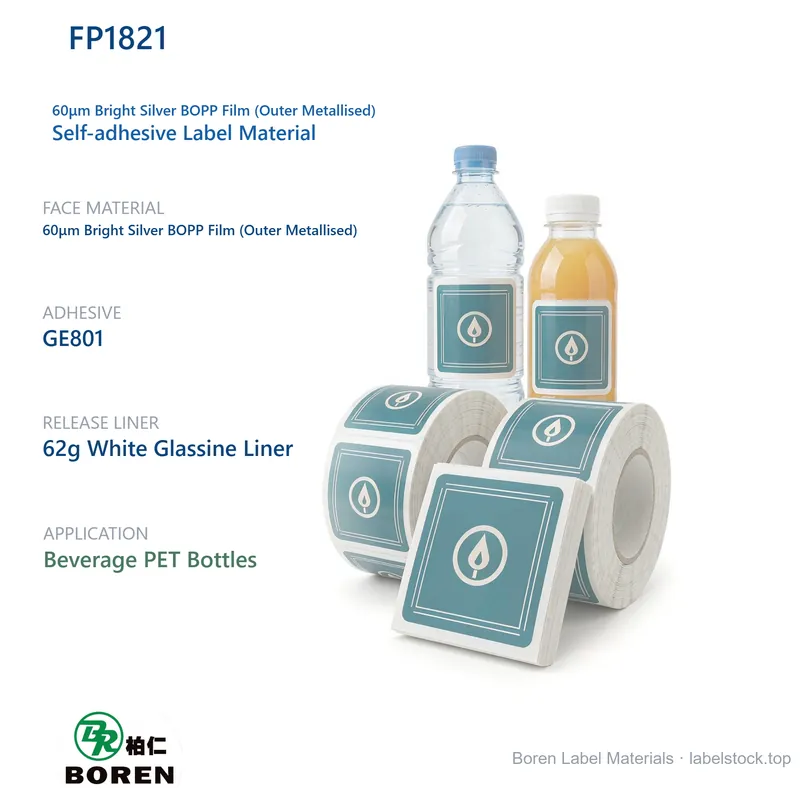 FP1821
60μm Bright Silver BOPP Film (surface metallised) · Low-odor / Residue-free
62g White Glassine Liner · Back Printing
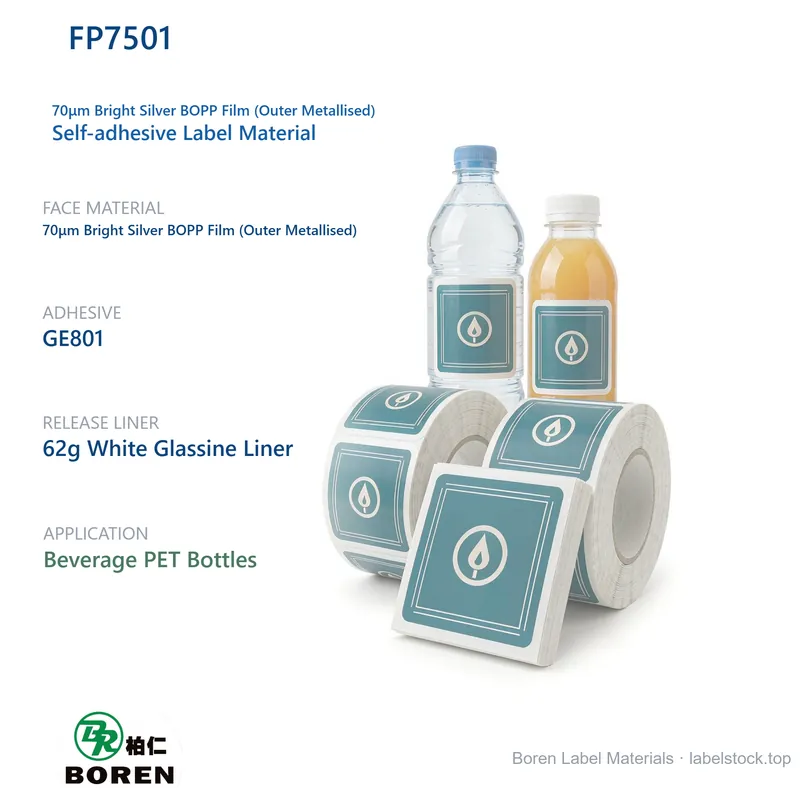 FP7501
70μm Bright Silver BOPP Film (surface metallised) · Low-odor / Residue-free
62g White Glassine Liner · Back Printing
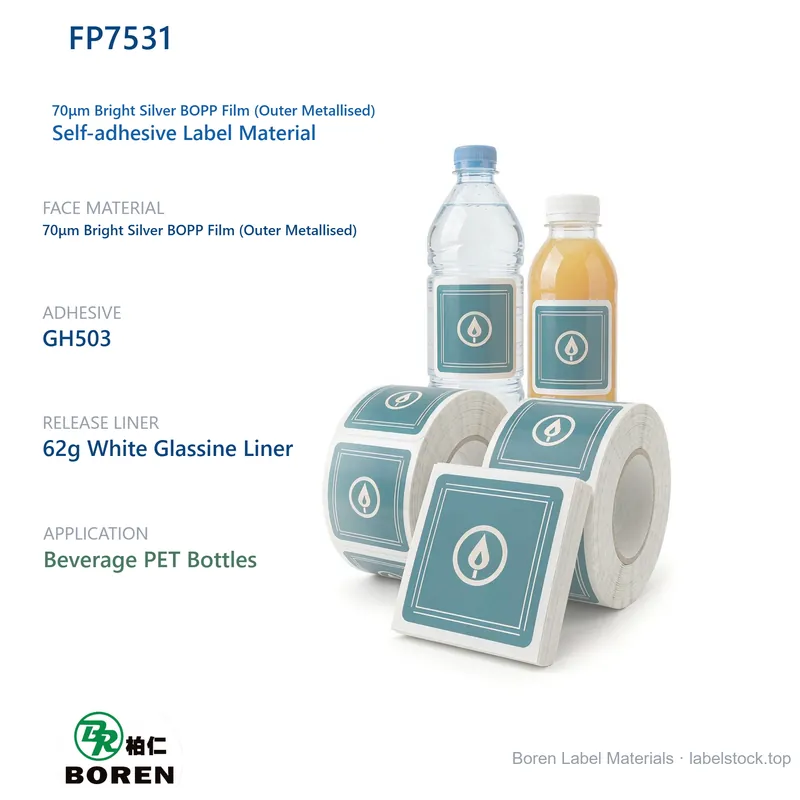 FP7531
70μm Bright Silver BOPP Film (surface metallised) · Hot Melt
62g White Glassine Liner · Back Printing
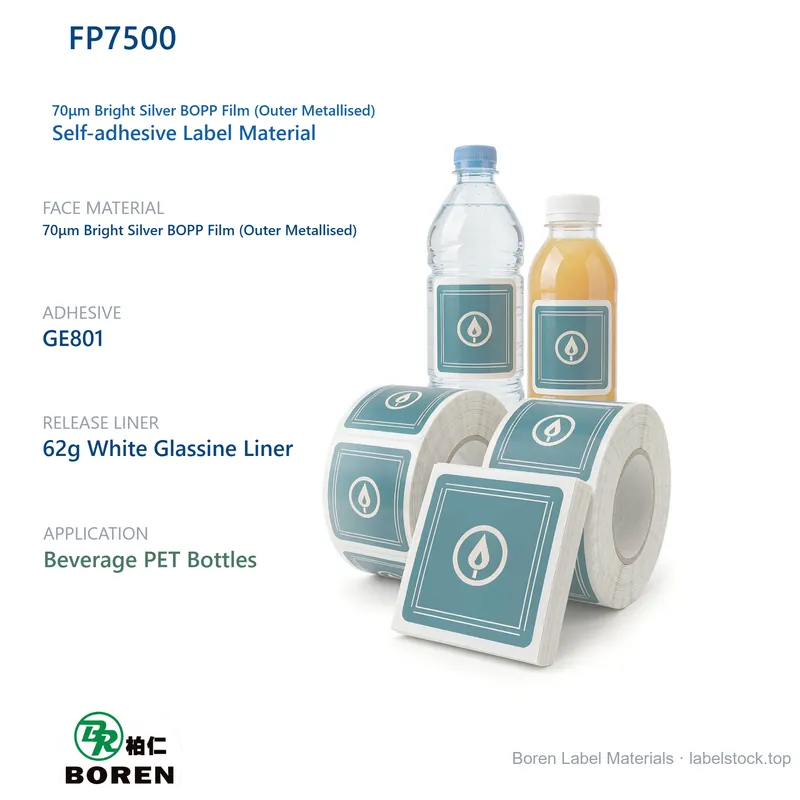 FP7500
70μm Bright Silver BOPP Film (surface metallised) · Low-odor / Residue-free
62g White Glassine Liner · No Back Printing